Add every run, including the garage and porch. How to measure for gutter guards.
Local install applies this page's 0.85 labor index to Angi's $6 to $13 national band. National brand uses HomeGuide's $15 to $45 dealer-system band, unadjusted.
A 180-foot local install in West Virginia plans at $918–$1,989 after the 0.85 labor index. This Old House's 2025 South average was $9.64 a foot. This is a planning figure, not a published West Virginia survey. Get at least three local bids.
The local range is a modeled planning figure: Angi's $6 to $13 a foot (7 October 2026) multiplied by a 0.85 labor index for West Virginia. It is not a published survey price for this market. The $9.64 a foot figure is This Old House's 2025 regional average for the South, project range $365 to $3,800. National-brand systems use HomeGuide (4 February 2026), $15 to $45 a foot, unadjusted. Get at least three local bids. Checked November 2026.
Home / Cost by state / West Virginia
Planning cost in West Virginia
A typical local install on a 180-ft house in West Virginia plans at about $918–$1,989. That figure is Angi's $6 to $13 a foot national band (7 October 2026) multiplied by a 0.85 labor index for this market. It is a planning estimate, not a published West Virginia survey price.
Grouped in the South for the regional survey, but the climate is Appalachian: wet woods, steep roofs, and ice dams. Labor is typically below the national mid-point; access and height often matter more than the rate.
This Old House's 2025 survey of the South averaged $9.64 a foot, with a reported project range of $365 to $3,800. Use that regional figure as a directional check: if it sits well above or below Angi's band, local quotes may lean the same way, but you still need bids. National-brand dealer systems stay at $15 to $45 a foot (HomeGuide, 4 February 2026) on this page because those quotes usually come from a national price book.
| House length | West Virginia local planning range | South TOH 2025 average | National-brand systems |
|---|---|---|---|
| 150 ft | $765–$1,658 | $1,446 | $2,250–$6,750 |
| 180 ft | $918–$1,989 | $1,735 | $2,700–$8,100 |
| 220 ft | $1,122–$2,431 | $2,121 | $3,300–$9,900 |
Local planning rates start from Angi (7 October 2026). Regional averages are from This Old House's 2025 regional survey. Professional dealer systems from HomeGuide (4 February 2026). Labor indexes are modeled planning factors, not official West Virginia prices. Checked November 2026.
Climate and debris in West Virginia
West Virginia averages about 45 inches of rain a year. That is enough, with a dense canopy, for a cheap screen to overflow in a fast storm. Typical snow cover: moderate to heavy in the mountains.
The debris that actually lands in West Virginia gutters is usually oak, maple, and hickory leaves, plus hemlock and pine in the high country. For that mix, plan on micro-mesh, not a solid hood, in the mountains.
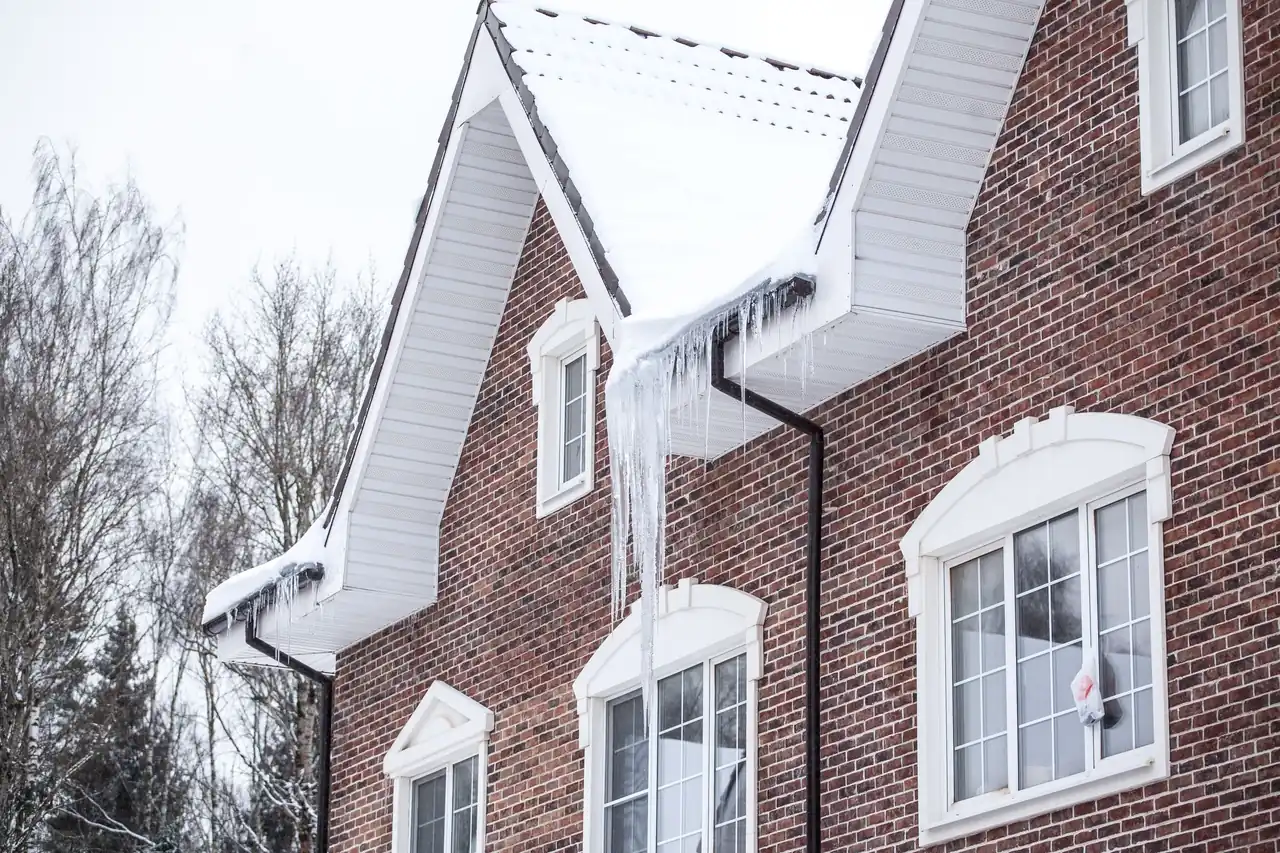
Ice dams are a real risk in West Virginia. Gutter guards do not prevent them, and a solid hood can hold snow at the eave. Fix attic insulation and ventilation first, then choose a micro-mesh that does not sit proud of the roof edge. See do gutter guards cause ice dams.
What local labor does to the price
Labor is the biggest regional lever on a professional install. The 0.85 index on this page is a planning factor against Angi's national band, not a contractor's rate sheet. Coastal, mountain and large-metro work usually costs more than the same footage in a smaller inland market, even inside one state. Height still matters everywhere: the national calculator adds about 30 percent to labor on two stories and 60 percent on three.
Nearby state calculators: Virginia, Pennsylvania, Ohio, Kentucky.
Related calculators and guides
- Full house cost calculatorLength, type, height, cleaning and repairs
- Cost by statePublished regional averages and national ranges
- Cost per foot by typeScreen, foam, brush, micro-mesh and hood
- Gutter guards for pine needlesWhy micro-mesh beats a cheap screen
- Gutter guards and ice damsWhat a guard can and cannot do in freeze-thaw weather
- Why gutter guards overflowRain, debris and undersized downspouts
- Check a LeafFilter quoteNational-brand prices have their own band
- How to measure your guttersGet the footage right before you compare bids
Common questions
How much do gutter guards cost in West Virginia?
A typical local install on a 180-ft house in West Virginia plans at about $918–$1,989 after a 0.85 labor index on Angi's $6 to $13 national band (7 October 2026). This Old House's 2025 South regional average was $9.64 a foot, or $1,735 for 180 feet. National-brand systems plan at $2,700–$8,100 at $15 to $45 a foot (HomeGuide, 4 February 2026). These are planning figures, not a published West Virginia survey. Get at least three local bids.
Why don't you list an official West Virginia price?
There is no official state-by-state gutter-guard survey that isolates West Virginia. Some sites invent a unique dollar figure without a named source. This page applies a documented 0.85 labor index to Angi's national band and shows the published This Old House 2025 South average ($9.64 a foot). That is less flashy and more honest. See all states on the cost by state page.
What kind of gutter guard works best in West Virginia?
For West Virginia, plan on micro-mesh, not a solid hood, in the mountains. The local debris is typically oak, maple, and hickory leaves, plus hemlock and pine in the high country. Fine debris such as needles or tassels needs micro-mesh; a cheap screen or foam pack will clog. See gutter guards for pine needles.
Does the climate in West Virginia change the cost or just the type?
West Virginia averages about 45 inches of rain a year. That is enough, with a dense canopy, for a cheap screen to overflow in a fast storm. Snow: moderate to heavy in the mountains. Climate mostly changes the type you should buy, not the list price of the mesh. Labor and roof height move the installed total more than rainfall does. Ice dams are a real risk in West Virginia. Gutter guards do not prevent them, and a solid hood can hold snow at the eave. Fix attic insulation and ventilation first, then choose a micro-mesh that does not sit proud of the roof edge. See do gutter guards cause ice dams.
Should I use the West Virginia calculator or the national one?
Use this page for a West Virginia-specific planning band (the 0.85 labor index on Angi rates, plus local debris and climate notes). Use the national house calculator when you want to change guard type, stories, cleaning and repairs on the same footage. Neither one is a contractor's quote.
Do national brands cost more in West Virginia?
Dealer-installed systems such as LeafFilter are usually quoted from a national or regional price book, not from Angi's local-job band. This page leaves that band at $15 to $45 a foot, or $2,700–$8,100 for 180 feet. Check a specific quote on the LeafFilter quote checker. Local labor can still show up as add-ons for height, steep roofs or repairs.