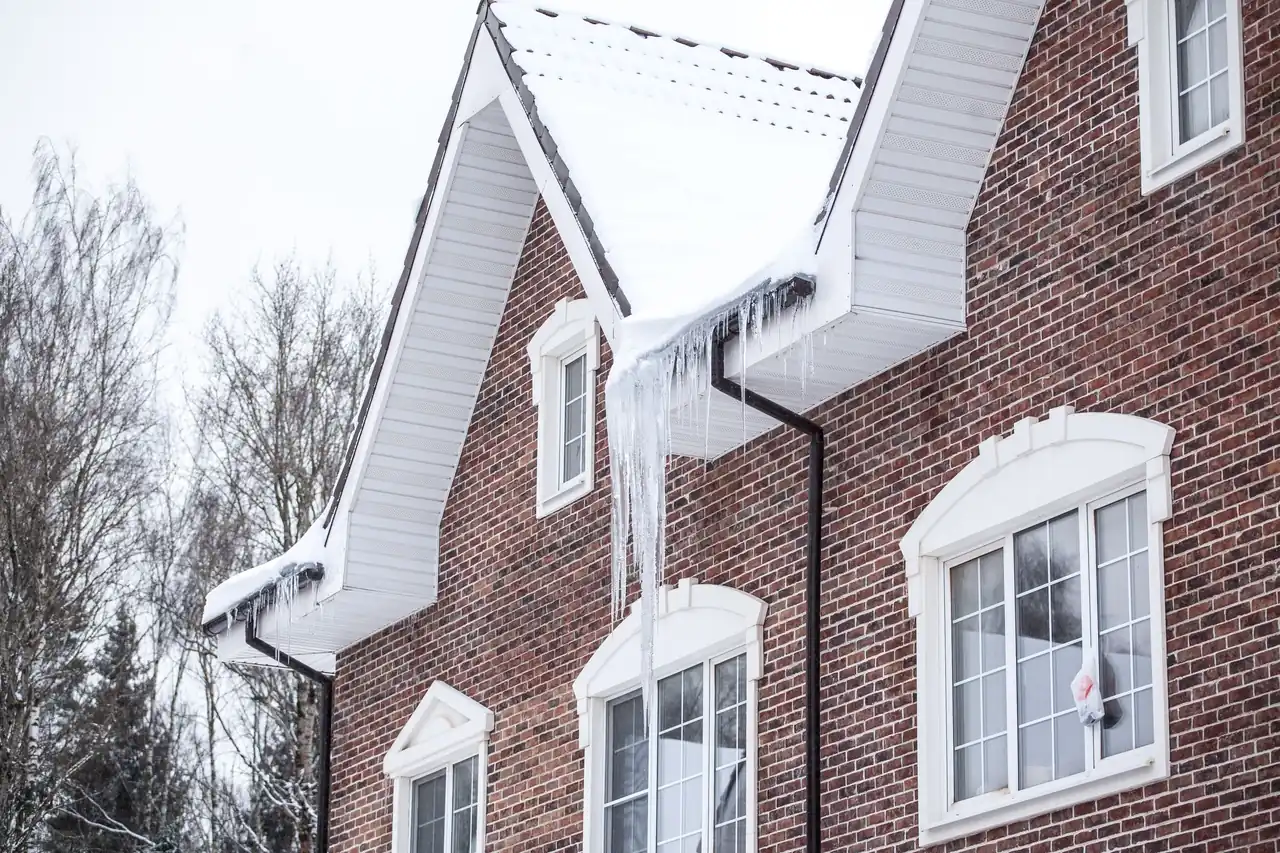
How an ice dam actually starts
The University of Minnesota Extension (reviewed 2022) is plain about the cause. An ice dam is a ridge of ice at the edge of the roof that stops meltwater from draining off. For one to form, there must be snow on the roof, and at the same time a higher part of the roof surface must stay above freezing while the eave stays below it. Snow melts on the warm part, runs down, and refreezes on the cold eave.
That temperature difference comes mainly from heat leaving the house: air leaks into the attic, weak insulation, and warm spots around hatches, lights, chimneys and ducts. The U.S. Department of Energy’s Building Science Education guide and the Building America Solution Center describe the same sequence, as does Building Science Corporation’s 2011 ice-dam briefing. A gutter, or a cover on a gutter, is downstream of all of that.
Do gutter guards prevent ice dams?
No. A This Old House guide updated 11 November 2026 says gutter guards do not reliably prevent ice dams. They can reduce debris-related clogs and help water drain when snow is thawing, which is useful. They do not stop heat from reaching the roof deck. If the attic is leaking heat, meltwater will still refreeze at the cold edge, with or without a guard.
That is also why a “lifetime clog-free” pitch is the wrong promise in snow country. The dam is a roof problem. Clearing leaves is a different job.
Can a gutter guard make icing worse?
A guard does not create the warm-roof, cold-eave pattern that starts a classic ice dam. It can still change how ice and meltwater sit at the edge:
- Solid hoods and covers can hold snow and ice on the lip of the roof. We already note this on our are gutter guards worth it page. Flat stainless mesh that sits in line with the roof tends to shed snow better, but it is not a dam preventer either.
- Frozen or clogged drainage still backs water up. This Old House lists frozen downspouts as a winter gutter failure. If meltwater cannot get through a guard or out of a frozen outlet, ice can build at the eave even when the attic is only a modest problem.
- Snow and ice can rip the guards off. Heavy snow can already pull gutters away from the fascia. In comments on recent 2026 YouTube reviews, homeowners described ice and snow sliding off the roof and tearing newly installed guards off in the first winter, and others described screen-style guards turning into a frozen mass, large icicles, and regular salt and icicle work at the front steps.
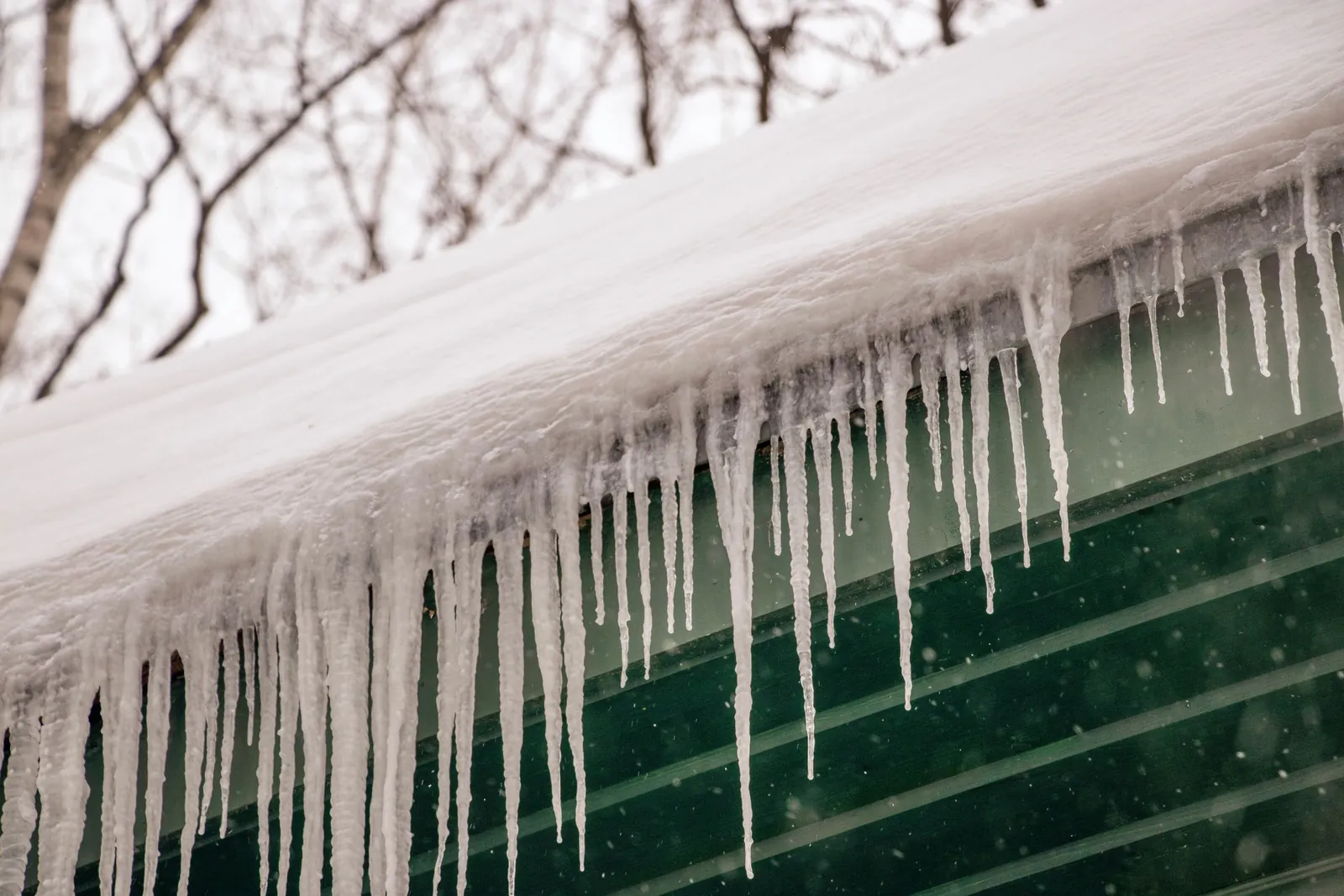
Icicles hanging from a guarded gutter are not, by themselves, proof of a full roof ice dam. They can also mean the cover or the downspout is iced over. A true dam can also form on a house with no guards at all. The practical step is to tell those two problems apart, then fix the attic if water is backing up under the shingles. Holiday light clips can also drip and form icicles in cold, wet weather, according to MasterShield (updated 31 August 2026). That is a lighting and drainage issue, not a classic roof ice dam. See how to hang Christmas lights on gutter guards.
What actually prevents ice dams
University of Minnesota Extension and the federal building-science guides agree on the long-term work:
- Air-seal the ceiling so warm indoor air cannot leak into the attic.
- Add insulation once the leaks are sealed.
- Keep the roof assembly vented so the deck stays cold, with soffit intake left clear.
- In cold climates, a self-sealing ice-and-water membrane at the eaves will not stop a dam, but it can stop backed-up water from leaking into the house if one forms.
For an urgent leak, Extension’s advice is temporary: a roof rake used carefully, or channels cut through the dam, done with the safety risk in mind. Mechanical attic fans are not a recommended ice-dam fix in Minnesota. None of those steps starts with buying a gutter cover.
Heated gutters and heat cables
Some dealers, including some Gutter Helmet installers, sell a heated option. This Old House’s November 2026 snow guide treats heated gutter systems as a supplement, not a full solution: they can help snow melt and water drain, but the attic still needs insulation and air sealing. For price, Angi’s heated gutter cost guide (updated 13 October 2026) puts the national average heated-gutter install at $974, with most homeowners paying $463 to $1,489 (8,227 verified projects). It lists heat tape at $1 to $6 a foot, professional labor at $12 to $20 a foot, and $40 to $70 a month in extra electricity during a harsh winter. Cables wear out in roughly 2 to 10 years. Angi’s heated gutters explainer (updated 8 July 2026) puts heated gutter helmets at $16.50 to $18.50 a foot plus the cable, and notes heat cable reduces, not prevents, ice. If a quote includes heat cables or a heated hood, get that line in writing and compare it with the cost of air sealing and insulation, which treat the cause. To price heat cable on just the runs that freeze, alongside guards, use our heated gutters vs gutter guards calculator.
If you still want guards in a snowy climate
Guards can still be worth it for the usual reason: fewer ladder climbs and fewer packed downspouts in the other three seasons. In snow country, ask three extra questions before you sign:
- How is the system fastened to the gutter or fascia, and has that detail been used through freeze-thaw and sliding snow?
- How does it behave at valleys and on a steep roof, where water and ice already run hard?
- What does the warranty say about ice, snow load and loose sections?
Then look at the quote the same way you would in any other climate: compare it with how much gutter guards usually cost on a house your size and with the cost-by-state page, as a check, not as a substitute for local bids.
Common questions
Do gutter guards cause ice dams?
No. Ice dams start when heat escaping through the roof melts snow, and that water refreezes at the cold eave. A gutter guard does not create that temperature difference. What a guard can do is hold snow or ice at the roof edge, or add ice at a frozen gutter, which can make winter icing at the eave worse.
Do gutter guards prevent ice dams?
No. A This Old House guide updated 11 November 2026 says gutter guards do not reliably prevent ice dams. They can help meltwater drain when debris is not blocking the gutter, but the reliable fixes are air sealing, insulating and ventilating the attic.
Which type of gutter guard is better in snow?
Solid hoods and covers can hold snow and ice on the edge of the roof. Flat stainless mesh that sits in line with the roof tends to shed snow better. Either type still needs a secure fastening, because sliding snow and ice have torn loosely attached guards off in the first winter. Neither type prevents an ice dam.
Are heated gutter guards or a heated Gutter Helmet worth it?
This Old House treats heated gutter systems as a supplement, not a full solution: they can help snow melt and water drain, but the attic still needs proper insulation and air sealing. Some Gutter Helmet dealers sell a heated version. Angi (13 October 2026) puts an average heated-gutter install at $974, most jobs $463 to $1,489, plus $40 to $70 a month to run in a harsh winter; its July 2026 explainer lists heated gutter helmets at $16.50 to $18.50 a foot plus cable. Compare a standard hood quote on our Gutter Helmet page, and ask the dealer to put any heated-option price in writing.
Can snow and ice rip gutter guards off?
Yes. Heavy snow can already pull gutters away from the fascia, and recent 2026 homeowner reviews describe ice and snow sliding off the roof and tearing guards off in the first winter. Ask how the system is fastened, not only what it is made of, and walk the eaves after the first hard freeze-thaw.
Should I take my gutter guards off for winter?
Not as a routine step, and not if it means climbing an icy roof. Taking the guards off will not fix the attic heat loss that causes ice dams. If a particular run ices up badly or the guards have already come loose, have a contractor look at that run, the fastening, and the attic, rather than stripping the whole house yourself in midwinter.
Why do icicles form in just one spot along my gutter?
Often because that section is holding water. This Old House says gutters should slope at least 1/4 inch every 10 feet toward the downspouts. A run that sags or is pitched the wrong way keeps standing water that freezes into icicles, with or without a guard, and a clogged downspout does the same. Run a hose in dry weather, look for pooling, and have the hangers adjusted before you blame or buy a gutter guard. Icicles along the whole eave point more to the attic heat loss described above. If a run overflows, see whether bigger downspouts would help.
- Heated gutters vs gutter guardsHeat cable and guard costs, and when you need both
- Christmas lights on gutter guardsHow to hang holiday lights without damaging the cover, and why clips can drip icicles.
- Are gutter guards worth it?Payback, downsides, and when to skip them.
- Check a Gutter Helmet quoteHood-style systems, including questions to ask about ice.
- Gutter guard cost by statePublished regional figures, without invented per-state prices.
- Gutter guard cost calculatorA planning estimate from length, type and height.
Ice-dam causes from University of Minnesota Extension (reviewed 2022), the U.S. Department of Energy Building Science Education guide to sealed eaves, the Building America Solution Center, and Building Science Corporation BSI-046 (8 February 2011). “Do not reliably prevent ice dams,” and heated systems as a supplement, from This Old House, “Best Gutter Guards for Heavy Snow (2026),” updated 11 November 2026. Heated-gutter prices from Angi’s heated gutter cost guide (updated 13 October 2026) and Angi’s heated gutters explainer (updated 8 July 2026). Owner winter problems summarized from public comments on 2026 YouTube reviews, without naming commenters. Last checked 16 November 2026. Gutter slope (at least 1/4 inch per 10 feet) from This Old House, “How To Fix Sagging Gutters”, checked 19 November 2026.